
Suction electrolyte hydrometer densitometer tool for testing battery fluid in lead-acid batteries, featuring ABS plastic construction with a measurement range of 1.1-1.3 and accuracy of 0.9*, compact size measuring 45x100x135 mm and weighing 108 grams.


Suction electrolyte hydrometer densitometer tool for testing battery fluid in lead-acid batteries, featuring ABS plastic construction with a measurement range of 1.1-1.3 and accuracy of 0.9*, compact size measuring 45x100x135 mm and weighing 108 grams.
Suction electrolyte hydrometer for testing lead-acid battery fluid with 1.1-1.3 measurement range
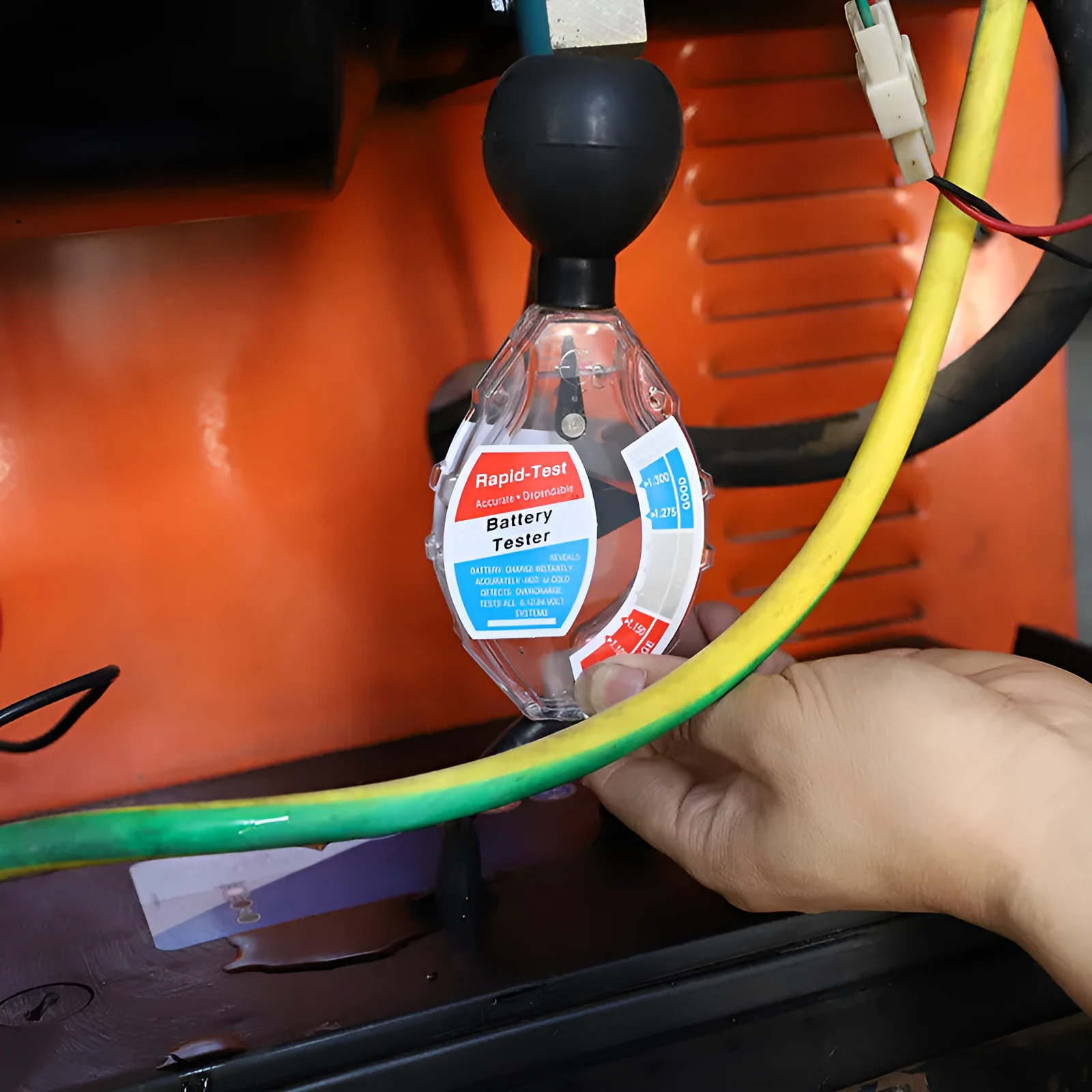
This suction-style electrolyte hydrometer provides battery maintenance technicians and vehicle owners with a straightforward tool for assessing the condition of lead-acid batteries. By measuring the specific gravity of battery electrolyte fluid, users can determine state of charge and identify weak cells requiring attention. The instrument's simple operation involves drawing fluid into the chamber and reading the floating scale, offering immediate feedback without complex electronic equipment. Its compact design makes it suitable for workshop use or inclusion in mobile maintenance kits.
Features and Construction
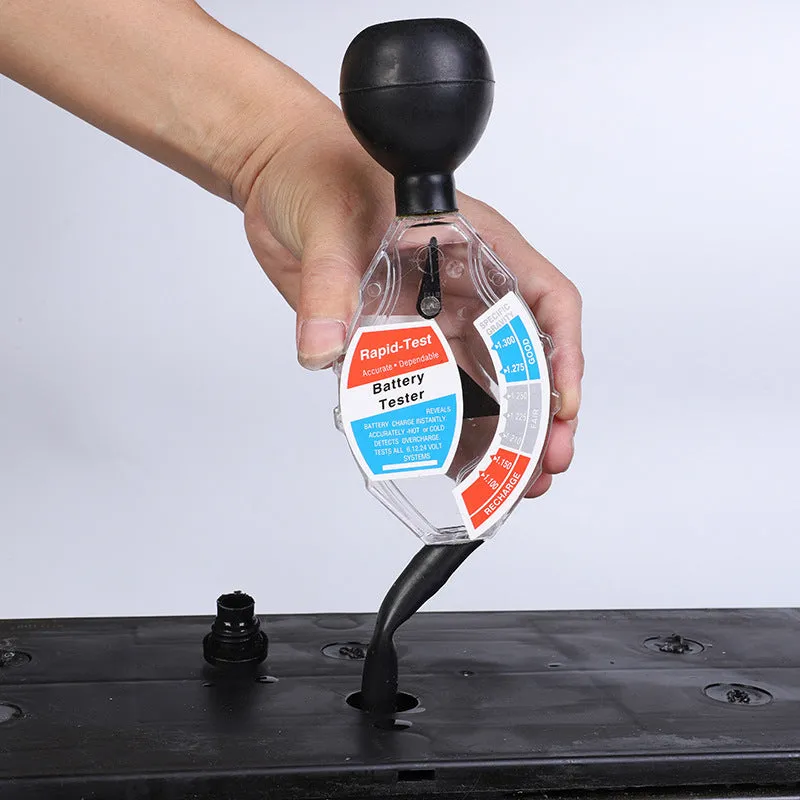
The hydrometer's design focuses on functional performance for battery testing applications, with construction details supporting reliable operation in typical maintenance environments.
Material and Build
Constructed entirely from ABS plastic, the hydrometer resists corrosion from battery acid exposure while maintaining structural integrity. The material selection provides chemical resistance necessary for repeated contact with sulphuric acid electrolyte solutions. The suction mechanism operates through manual pressure differential creation, drawing fluid into the graduated chamber without electrical power requirements.
Size and Practical Fit
With dimensions of 45 mm wide by 100 mm deep by 135 mm tall and a weight of 108 grams, the instrument maintains a compact form suitable for storage in toolboxes or vehicle compartments. The size allows operation in confined battery compartments while providing sufficient chamber volume for accurate fluid sampling. The weight contributes to stable holding during the sampling process without adding bulk to maintenance kits.
Uses and Placement
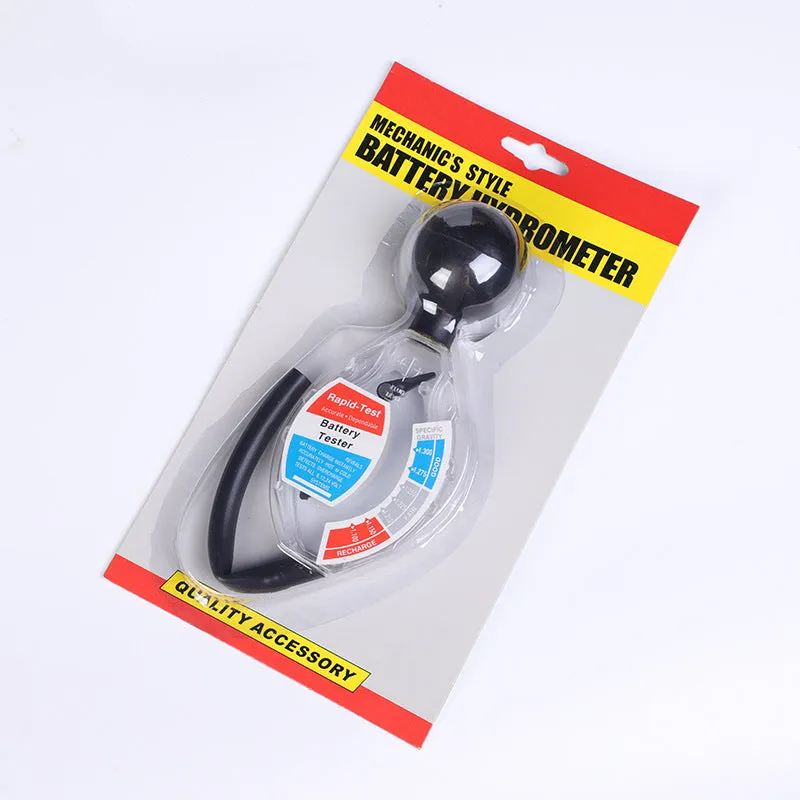
The hydrometer serves specific testing applications across automotive, marine, and backup power system maintenance scenarios where lead-acid batteries require regular monitoring.
Event or Professional Use
Professional automotive technicians can employ the hydrometer during battery service procedures to assess individual cell condition within multi-cell batteries. The 0.9* accuracy rating provides sufficient precision for identifying significant variations between cells that indicate imbalance or deterioration. Fleet maintenance operations benefit from regular electrolyte testing to extend battery lifespan through timely maintenance interventions.
Everyday Home Use
Vehicle owners can use the hydrometer for periodic battery health checks, particularly before seasonal changes that affect battery performance. The simple operation requires minimal technical knowledge, with the scale providing immediate specific gravity readings. Home backup power system maintenance represents another application where regular electrolyte testing helps ensure reliability during power outages.
Benefits and Buying Value

The instrument delivers practical advantages through simplified battery assessment procedures that support maintenance planning and replacement decisions.
Reuse and Low Maintenance
The ABS plastic construction supports repeated use with proper cleaning procedures, while the absence of electronic components reduces failure points. Regular rinsing with clean water after use prevents acid residue accumulation that could affect future measurements. The durable material selection maintains clarity for scale reading throughout the product's service life.
Why Choose This Product
This hydrometer provides a cost-effective alternative to electronic testers for basic electrolyte specific gravity measurement, with the 1.1-1.3 range covering typical lead-acid battery operating conditions. Its suction operation eliminates the need for separate pipettes or sampling tools, while the compact dimensions ensure practical storage between uses. The dedicated lead-acid battery application focus ensures appropriate scale calibration for this battery chemistry type.
