
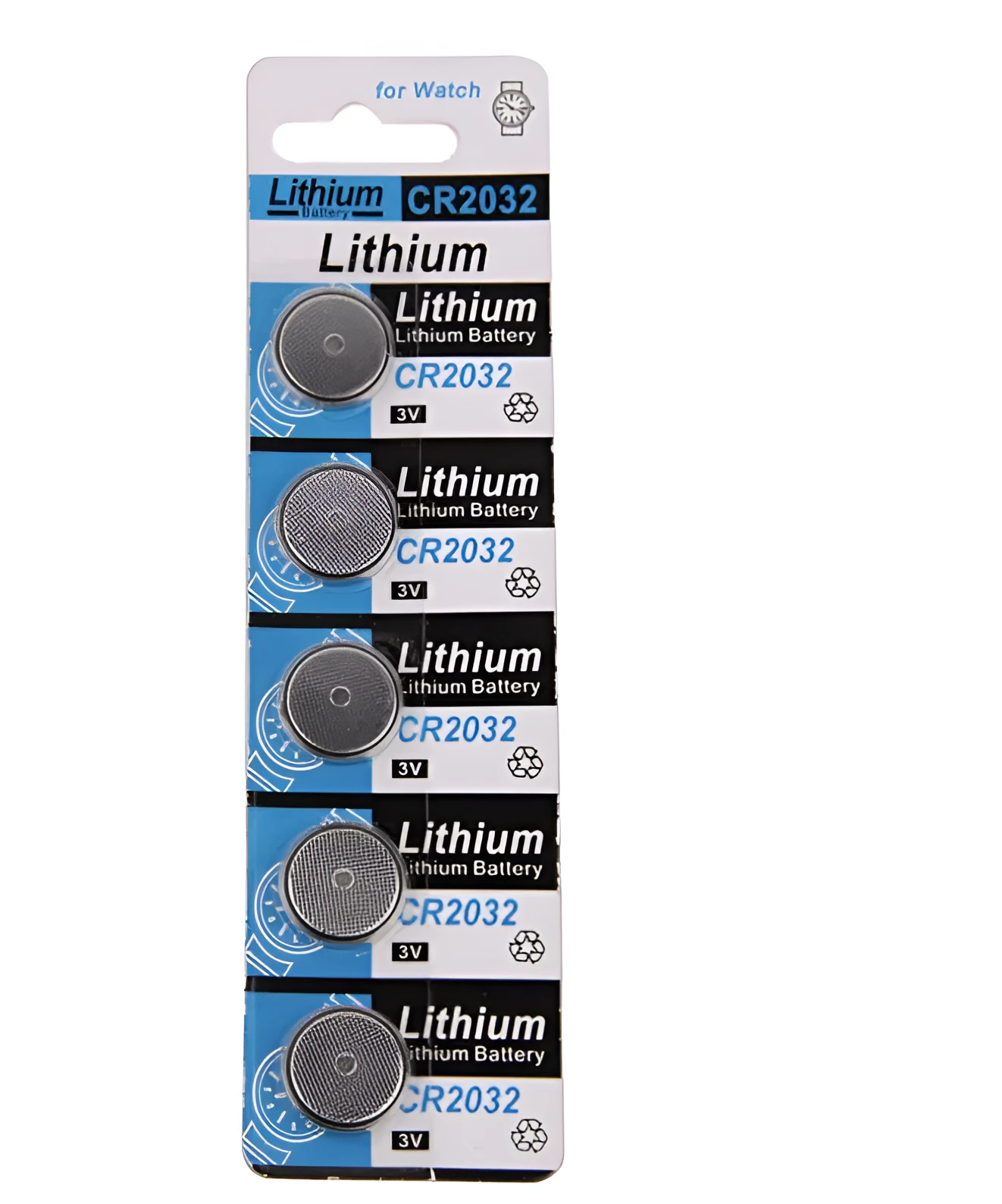
CR2032 Lithium Manganese Button Battery Pack for Weight Scales, Electronic Scales and Low-Power Devices, 3V 160mAh 20.0mm x 3.2mm, 5 Capsules per Card with Anti-Leakage Technology


CR2032 Lithium Manganese Button Battery Pack for Weight Scales, Electronic Scales and Low-Power Devices, 3V 160mAh 20.0mm x 3.2mm, 5 Capsules per Card with Anti-Leakage Technology
CR2032 3V Lithium Button Batteries for Weight Scales and Low-Power Electronics

This product is a pack of CR2032 lithium manganese button batteries, categorised as a B-product. They are presented as a practical, budget-conscious power source for a range of common low-power devices where the absolute highest grade of battery is not a necessity. The key specification is a 3-volt output with a rated capacity of 160mAh, housed in the standard 20.0mm diameter by 3.2mm height form factor. The manufacturer clearly states these batteries are intended for applications like weight scales, body fat testers, car remote controls, and computer motherboards. It is important for buyers to understand the product description: these are described as lower-end electronics where occasional cells may have insufficient charge, making them suitable for users who accept this variance for non-critical uses.
Features and Construction

The core features of these batteries are defined by their technical specifications and stated build qualities. They are designed to meet the basic power requirements of many household and personal electronic items without the cost associated with premium-grade cells.
Material and Build
These batteries use a lithium manganese chemical system, which provides a high single-cell voltage and is known for stable discharge characteristics. The construction incorporates a steel sheet described as wear-resistant and high-temperature resistant, which forms part of the battery casing. A stated feature is the use of anti-leakage technology, aimed at preventing electrolyte leakage that can damage electronic devices, a common concern with older battery types.
Size and Practical Fit
The physical dimensions are precisely 20.0mm in diameter and 3.2mm in height. This is the universal standard for CR2032 batteries, ensuring compatibility with any device compartment designed for this common cell size. Whether you are replacing a battery in a kitchen scale, a car key fob, or a computer motherboard CMOS, this size is universally recognised and will fit correctly, provided the device requires a 3V source.
Uses and Placement
The source text provides a comprehensive list of typical applications for this type of battery. This guidance helps buyers confirm compatibility before purchase and understand the product's intended scope.
Event or Professional Use
While primarily for consumer devices, such batteries can be used in professional or commercial settings where many low-power devices are deployed, such as in offices (attendance machines, calculators) or retail (electronic price tags). Their cost-effective nature as a B-product makes them suitable for bulk, non-critical applications where the occasional dud cell is an acceptable trade-off for lower expenditure.
Everyday Home Use
This is the primary use case. The batteries are specified for weight scales, body fat testers, ear thermometers, blood glucose meters, TV remote controls (like Xiaomi TV), electronic dictionaries, toys, watches, and perpetual calendars. They are a general-purpose power solution for the small electronics that populate modern homes, offering a straightforward replacement for expired cells.
Benefits and Buying Value

The value proposition rests on practicality and cost-efficiency for suitable applications. The product description is transparent about its grade and intended use, allowing for an informed purchase decision.
Reuse and Low Maintenance
As a disposable primary cell, 'reuse' is not applicable. The benefit lies in being a ready stock of replacement batteries. The anti-leakage technology is a maintenance benefit, as it aims to protect your devices from potential damage caused by a leaking battery, potentially extending the life of the electronic item itself.
Why Choose This Product
You would choose this product if you need a supply of standard CR2032 batteries for non-critical, low-power devices and are comfortable with the trade-off described: a lower cost for a B-grade product where performance consistency is not guaranteed for every single cell. It provides the correct voltage, capacity, and physical fit for a wide array of common devices at a budget-friendly point. It is not the choice for high-drain devices, critical medical equipment, or situations where every battery must perform perfectly from the first use.
